Yellowstone National Park
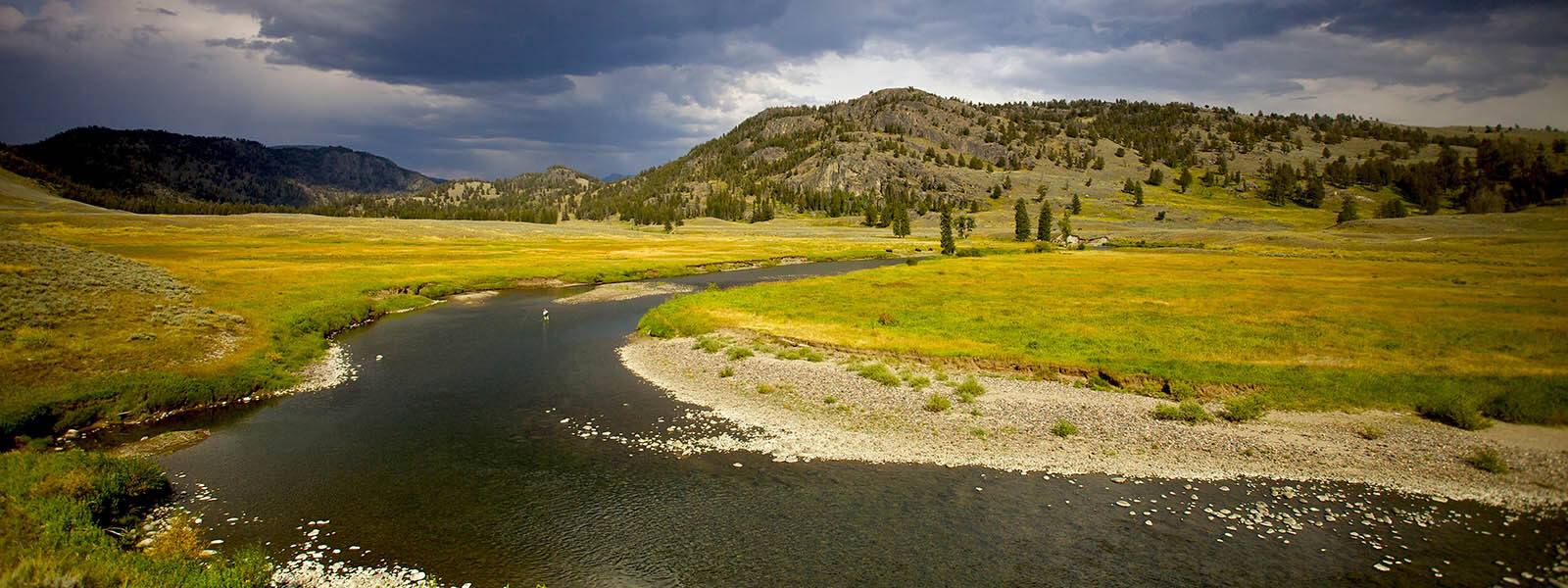
An iconic fishing destination with big views and wildlife. Fishing Yellowstone is a once in a lifetime opportunity, and our guides know its waters well.
Yellowstone National Park: Fly Fishing Destination Overview
Yellowstone National Park, established in 1872 as America’s second national park (Hot Springs National Park was created in 1832), spans nearly 3,500 square miles across Wyoming, Montana, and Idaho. Renowned for its spectacular geothermal features—including the iconic Old Faithful geyser—Yellowstone also boasts abundant wildlife, scenic landscapes, and diverse ecosystems ranging from lush forests to alpine meadows. Anglers flock to Yellowstone for the unforgettable thrill of casting a line with bison and elk as their audience—and with just enough distance from any bears to keep the “wildlife encounter” strictly a fish tale.
Yellowstone National Park is the birthplace of fly fishing in the American West and remains one of the most diverse and rewarding trout fisheries in the world. With hundreds of miles of fishable water—including iconic rivers, spring creeks, and backcountry tributaries—the park offers a pure, technical, and highly seasonal angling experience.
Unlike Montana’s roadside fisheries, Yellowstone demands more from anglers:
- Walking and exploration
- Precise presentations
- Understanding of hatch timing and water type
In return, it offers native trout, lower-pressured water, and unmatched variety.
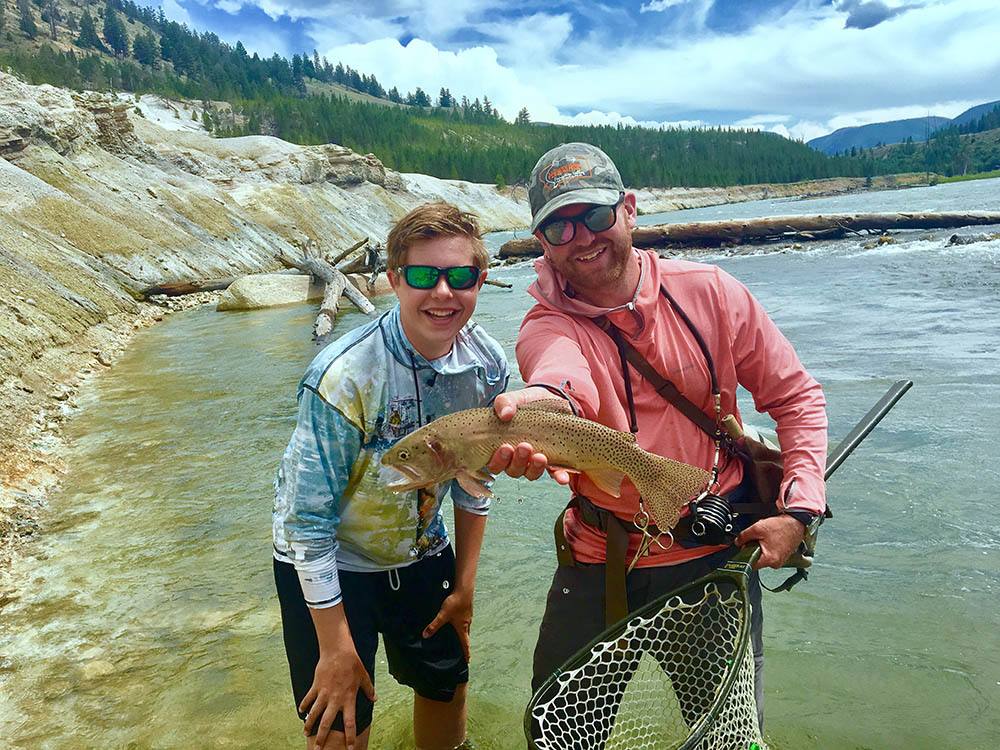
Two anglers holding a trout in a river below pale rocky banks
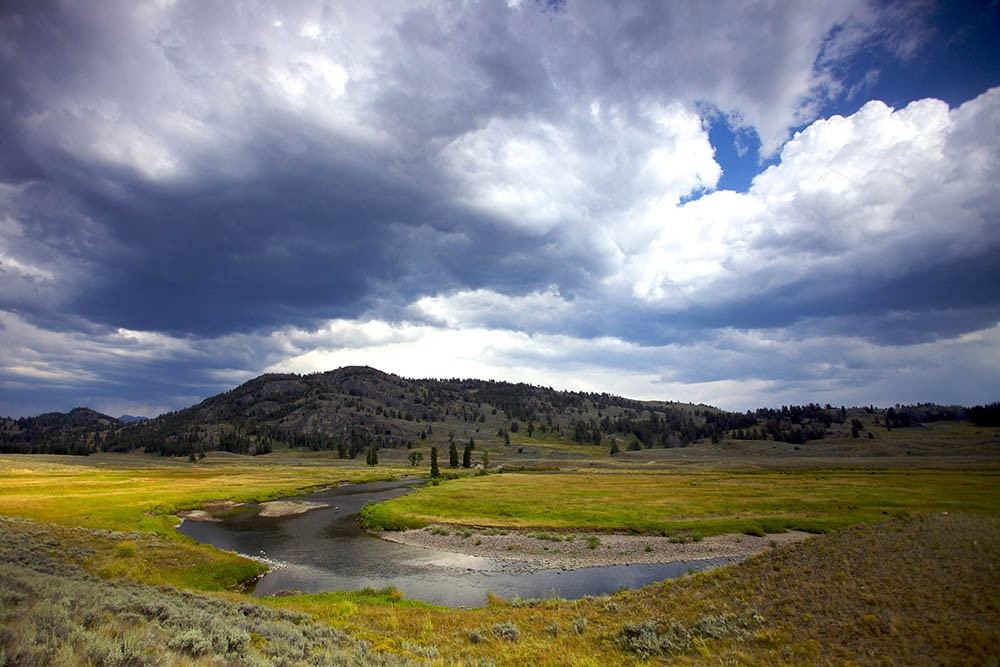
Small stream curving through open grassland under towering storm clouds
Roadside Ease or a Hike to Solitude
Choose from easy access fishing near the park roads, or up the adventure with a quick hike. The hiking option gives you an isolated, stunningly beautiful fishing trip few will ever experience, even if the fish aren't always trophies.
Either way you'll be on storied water inside Yellowstone National Park, with a guide who knows which stretch fits your legs, your casting, and your day.
Yellowstone National Park: Character & Fishing Style
Fishing Character: The waters offer clear, technical water and structure that varies from long riffles to pocket water. Unlike spring creeks or tailwaters, success here depends on drift quality, presentation, and water reading.
Seasonal Highlights:
- Early Season: Cooler water favors nymphing and early mayfly activity.
- Summer: Dry fly opportunities abound on emerging mayflies and terrestrials.
- Fall: Blue Winged Olives and crisp conditions produce excellent dry fly action.
Species: Native Yellowstone cutthroat, brown trout.
Angling Insight: Anglers must be precise and adaptive. The river fishes best when you can match the drift to the current and watch for rises along seams and banks. Compared to smaller tributaries, it demands a broader approach to water reading and presentation.
Fishing Approach
Fishing inside the park is defined by:
- Wild, native trout populations
- Clear, often technical water
- Short, intense hatch windows
- Strong seasonal closures and regulations
Key differences from outside the park:
- Fish are often more selective
- Dry fly fishing is more hatch-driven
- Presentation matters more than covering water
Primary techniques:
- Dry fly fishing (dominant during summer)
- Dry-dropper rigs for prospecting
- Light nymphing in deeper pools and early season
Key Sections of Yellowstone National Park
FIREHOLE RIVER
- Fly fishing only, no artificial lures
- Opens May 1, weeks ahead of the park’s standard season
- Catch and release all rainbow and brown trout
- Flows to Madison Junction, where it meets the Gibbon River to form the Madison
GARDNER RIVER
- Strong populations of native Yellowstone cutthroat trout
- Most consistent dry fly fishing
- Best early-season hatch fishing (Baetis, caddis)
- Less pressure since the 2022 flood as access points are limited and require some short hiking
GIBBON RIVER
- Different sections of the river provide wildly different tactics
- Easily accessed from the road
- Slower waters above the falls
- Chance to catch rainbows, cutthroat, brookies, brown trout and the occasional grayling
- Drakes, PMD’s early in the summer season
LAMAR RIVER
- Iconic scenery with mostly native trout species
- Classic post-runoff stonefly water
- Tributary creeks provide some of the best fishing post-run-off
MADISON RIVER
- Begins at Madison Junction, where the Firehole and Gibbon rivers meet
- Fly fishing only, no artificial lures
- Catch and release all rainbow and brown trout
- Native whitefish must be released
- Opens May 1, weeks ahead of the park’s standard season
Yellowstone National Park at a Glance
Map of Yellowstone National Park Fly Fishing Areas
River Conditions
Current River Conditions
Trips in Yellowstone National Park
Yellowstone National Park is fished on guided walk and wade trips, full day only.
Full day only, with the guide. Walk and wade trip details.
All trips into Yellowstone National Park require a YNP fishing license, separate from the Montana license used on our other waters. A park entrance fee of $20 per person applies if applicable. Our shop staff can walk you through both when you book.
Ready to book?
Have questions about our Guided Float or Wade Trips? Wondering what time of year, or which river to fish?
Call Angler’s West at 406-333-4401, or send us a message. Our seasoned guides & shop crew look forward to helping you have an amazing fly fishing trip in Southwest Montana.